Plans for the chapel
The forge has been transformed inside, and the chapel is already in use. Now we want it to look like a chapel from the outside too. These are the plans and drawings that show where we're going.
The vision
Help us turn an old forge into a beautiful chapel along the pilgrim route in Gudbrandsdalen! Last year the forge got its interior transformation, and the chapel is already in use. But from the outside it still looks just like a forge.
The next step is to make it look like a chapel from the outside too — an expression inspired by the many beautiful churches of Gudbrandsdalen, with a church spire, a bell tower, dragestil and an apse at the back.
Important supporters
To make this happen, architect Twin Nguyen of Porsgrunn has been an invaluable help, working out solutions and drawing plans that give us an excellent starting point.
In addition to the many individual benefactors of the chapel, there is one support association that has stood by us since the very start, with advice, guidance, encouragement and financial support: Route de l'Europe Chrétienne. This association, led by Robert and Claudia Mestelan, focuses on re-evangelising Christian Europe through pilgrimage work. They do this by spreading information about pilgrim routes, organising pilgrim tours and, not least, restoring or building churches, chapels, crucifixes, icons and statues along the pilgrim ways. A chapel along the Gudbrandsdalsleden pilgrim route to Nidaros they see as a good contribution to their work!
The work
More specifically, the wish is to build out the chapel: replace the roof from corrugated sheet to slate, build a new entrance with a roof, raise a bell tower with a church spire, and build an apse with room for a sacristy in the north end.
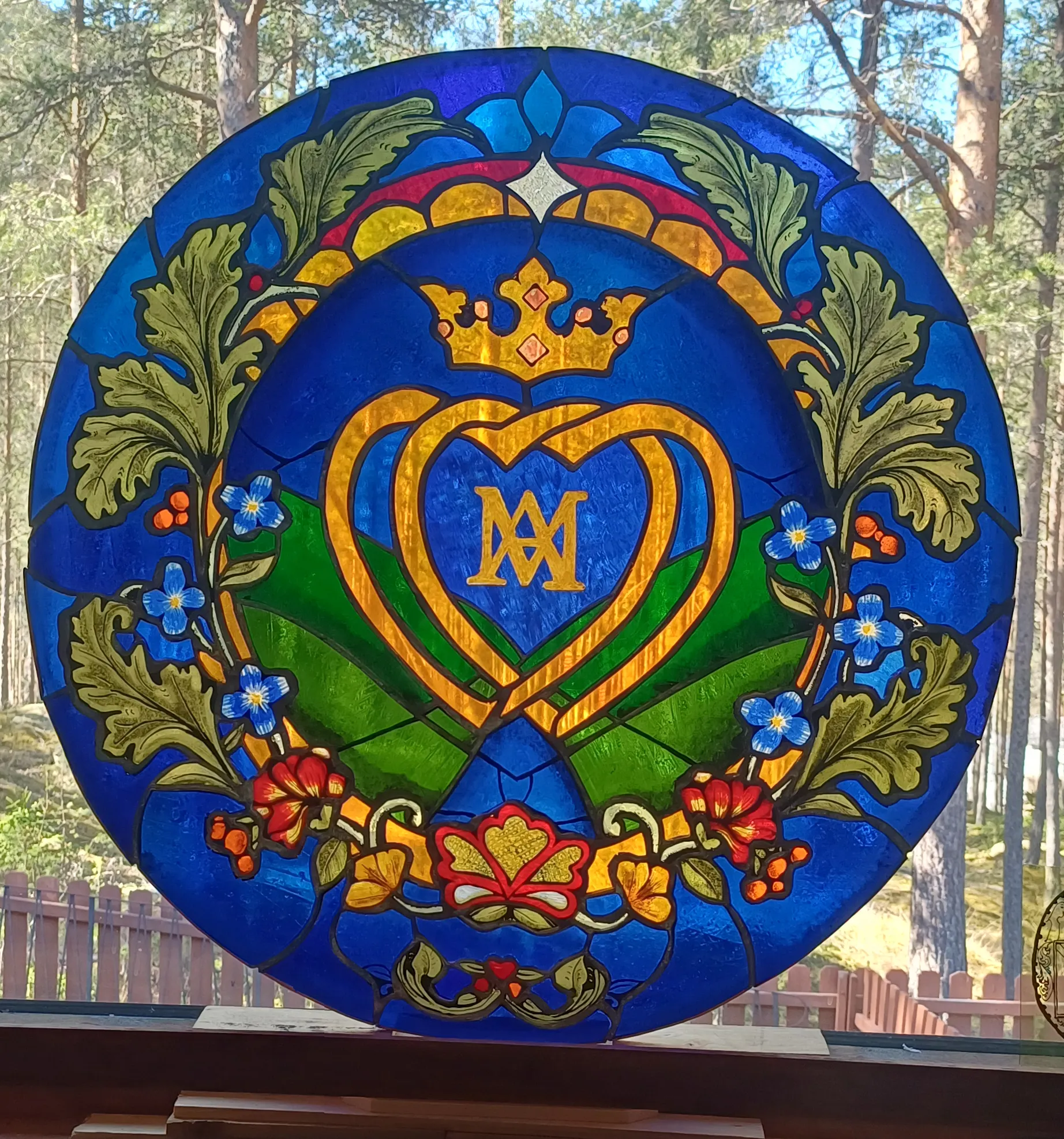
The stained glass window
First drawn by Ayla Olava Heimly, then worked and crafted by Sigrid Blekastad, a glassmaker from Gausdal living in Lalm. Sigrid has been a supporter from day one and, in dialogue with us, has managed to create what will become the chapel's most beautiful pearl, set to crown the altar up under the roof.
The bell tower
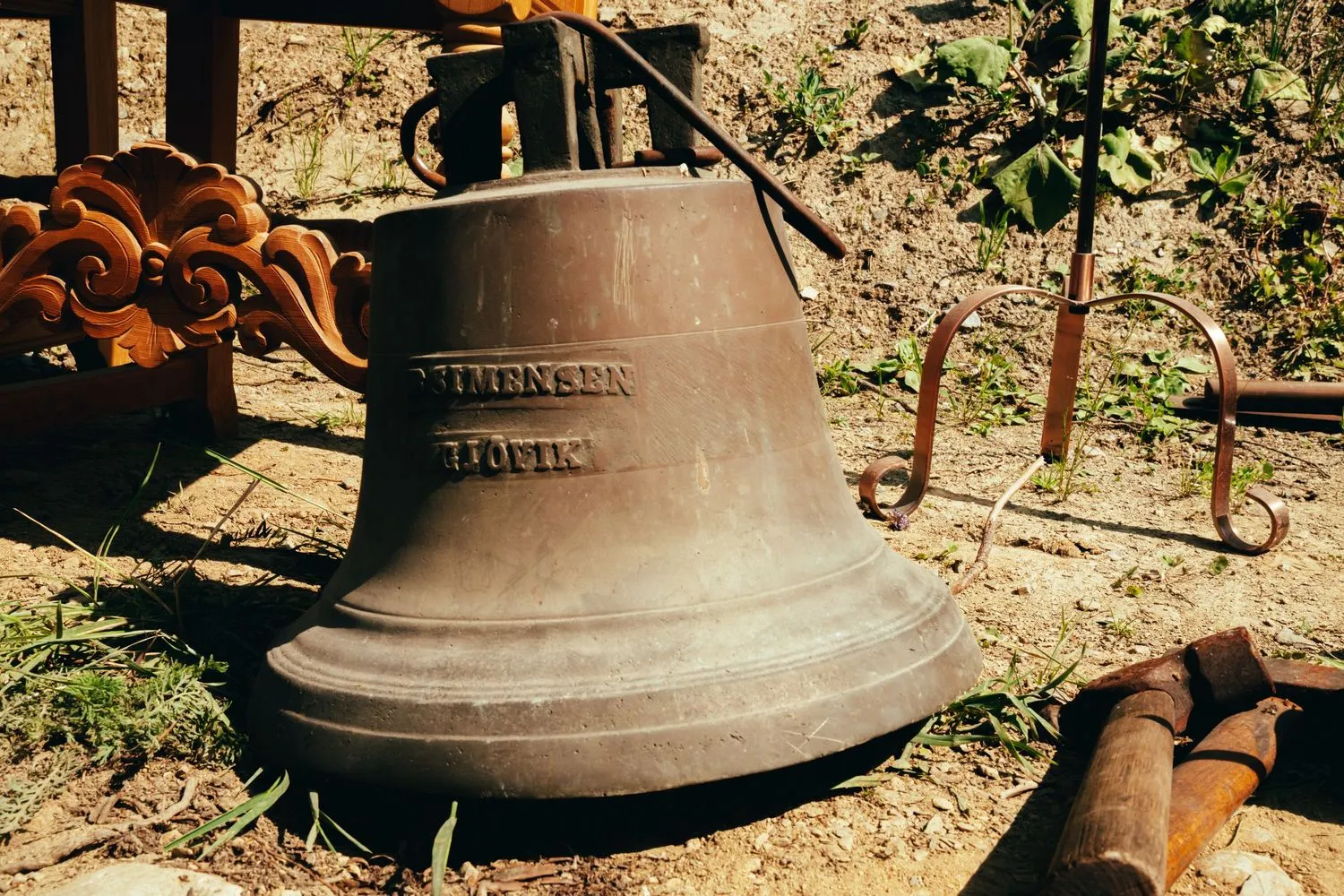
It is common on farms in Eastern Norway, and especially in Gudbrandsdalen, to have so-called "meal bells" (farm bells, storehouse bells) that were used to ring in meals when the workers were out in the fields. The bells were also used to ring on Christmas Eve, Easter Eve and Pentecost Eve, to "ring in the feast" — a possible remnant of an old tradition of beginning the celebration of the high feast already at first vespers the evening before. We have managed to find our own meal bell again, and look forward to being able to ring in, not only dugurd, non and other meals, but the Eucharistic meal in the celebration of the Holy Mass.
Scale drawings
The following drawings show the measurements we have in mind.
The chapel isn't finished yet.
Your support helps us build out the chapel. Every hand helps.