From forge to chapel
An old forge at Ledum Farm, unused for decades, has been turned into a chapel dedicated to Our Lady of Gudbrandsdalen. This is the story of how it happened — and where it goes from here.
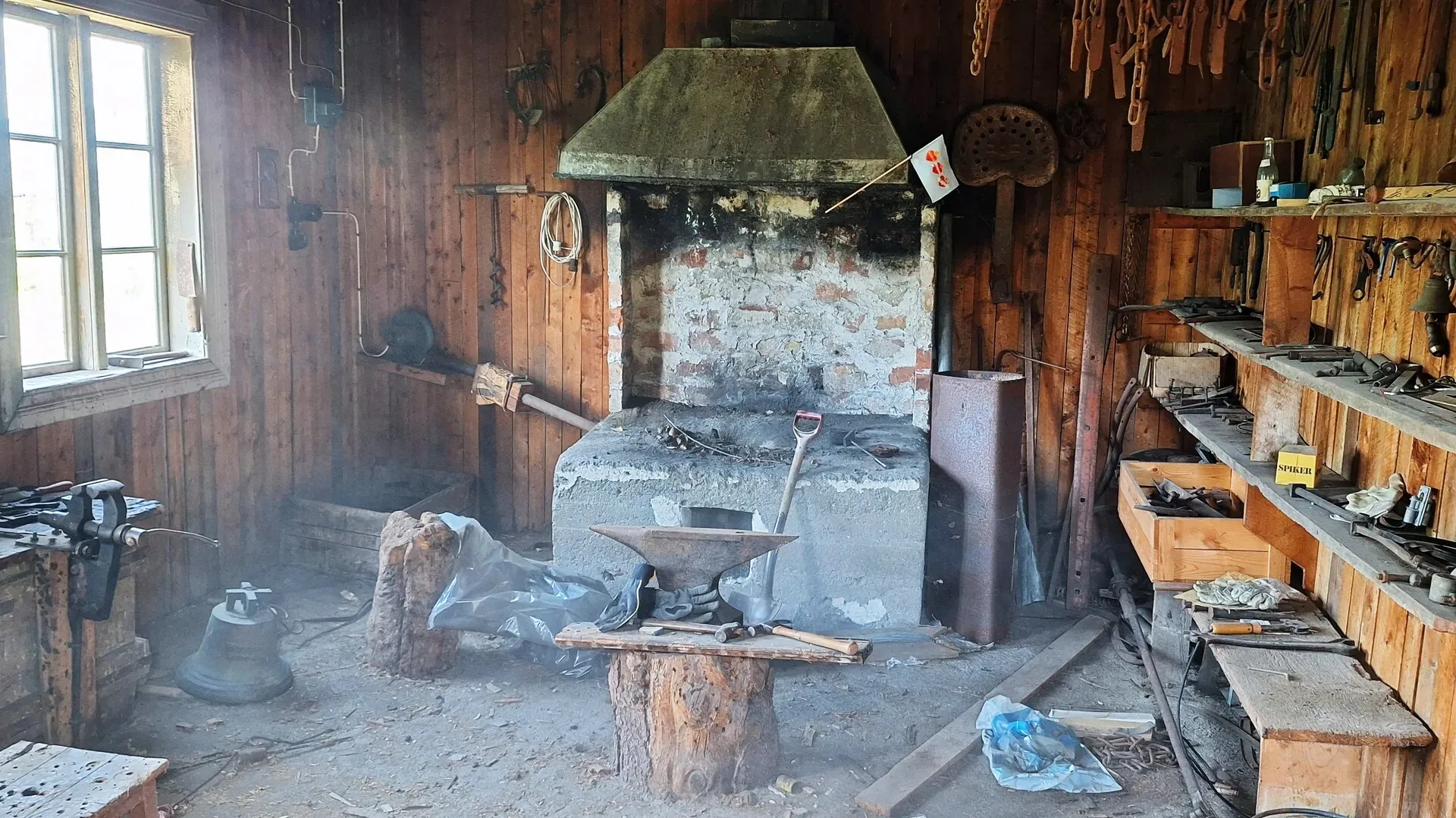
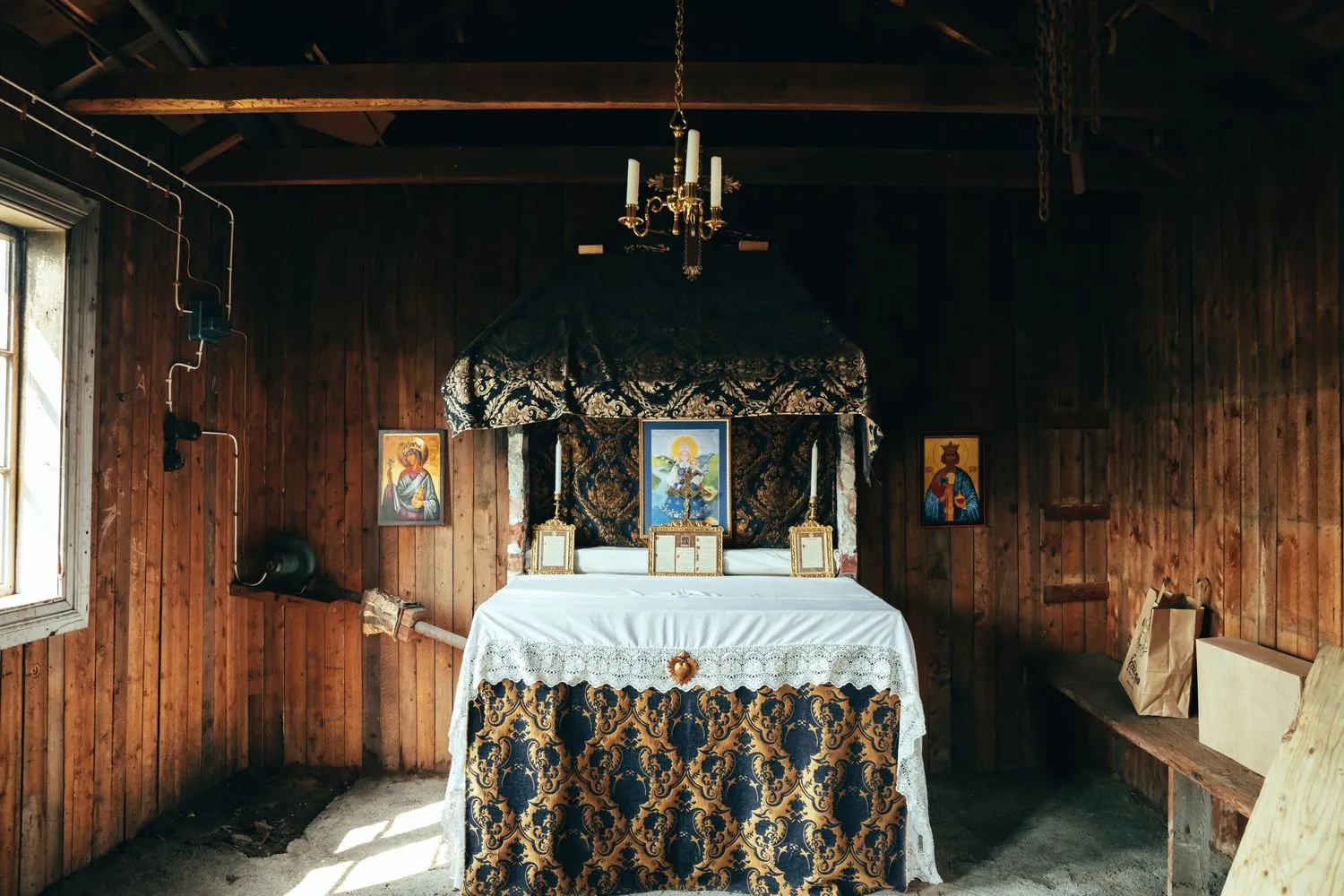
Drag, or use the arrow keys, to see before and after
The building
What was once a humble forge, unused for decades, has now been turned into a chapel dedicated to Our Lady of Gudbrandsdalen.
The first step was to make the chapel accessible: felling the trees that had grown up around the forge and shut it in, clearing out and throwing away old scrap and unnecessary equipment, washing, and sweeping away dust and ash. The most important step of all was to turn the old hearth into an altar for the holy sacrifice of the Mass. Everything else could then fall into place, step by step.
The vision
The next step is to make the forge look like a proper chapel. It will take on an expression inspired by the many beautiful churches of Gudbrandsdalen, with a church spire, a bell tower, dragestil, and an apse at the back.
As far as possible we will use local craftsmen and buy materials from local businesses, so that the chapel is anchored even more clearly in Gudbrandsdalen.
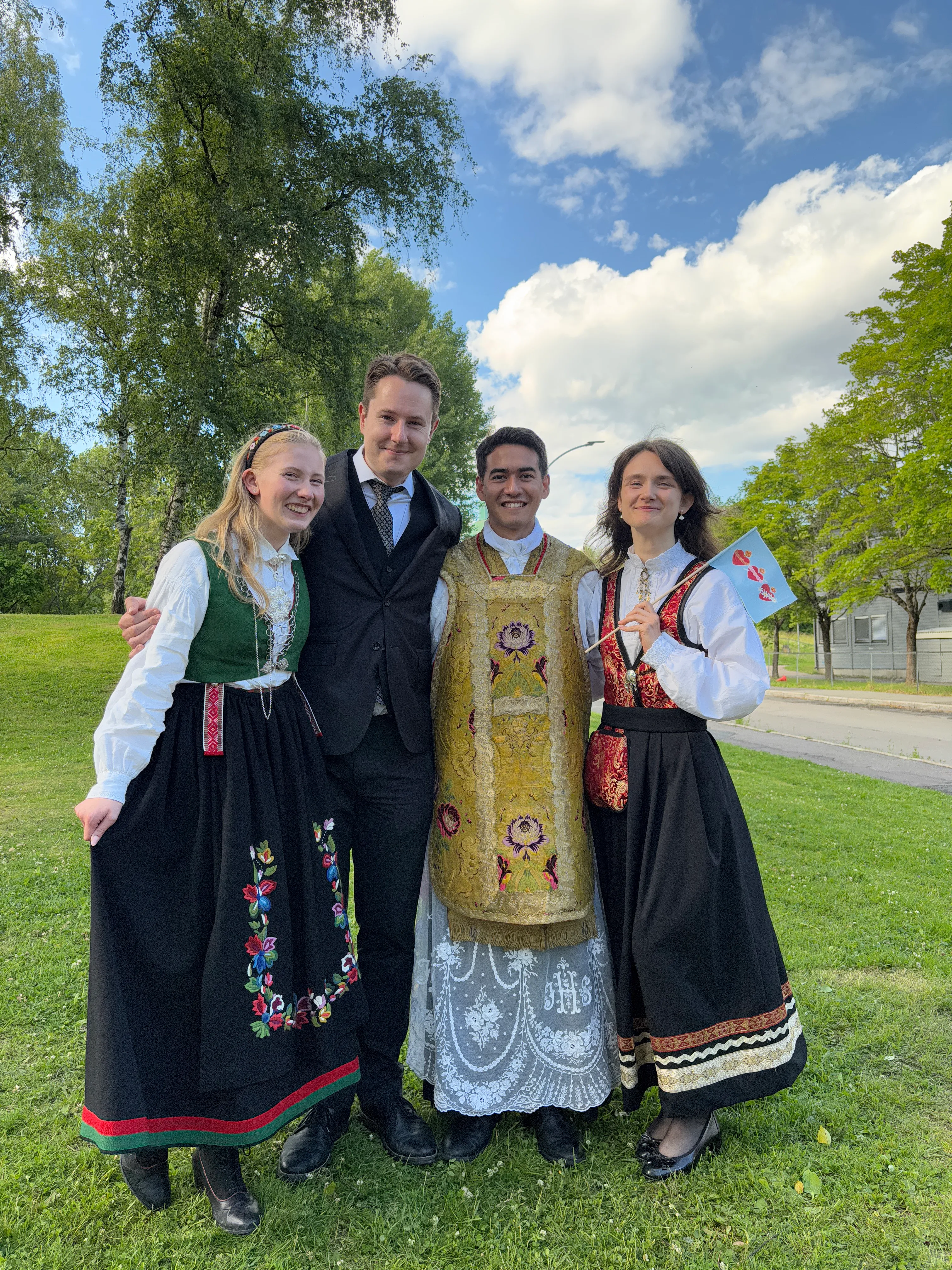
The chapel's support association — made up of p. Mathias Bruno Ledum, Andreas Normann Fladstad, Ayla Olava Heimly and Marie Johanne Klara Birgitta Sjøgreen Foss — wants to preserve and pass on local cultural heritage, be it religious traditions and customs, building technique, craftsmanship, music or art.
Many more have already given their time, effort, knowledge, tools and money, and there is room for more hands. Just join in!
The name
The support association behind the chapel has been given the name Capella Reginae Norvegiae — Latin for «the chapel of the Queen of Norway» — and it has become the official name used in social media and the one that works best internationally. In everyday speech, however, we use the name Mariaslæen.
«Slæen» is the local way of saying slette (meadow), eng (field), slått (haymaking), etc., in the definite form, and is used as a name for various mountain pastures in Øyerfjellet, among them the Ledum family's own pasture «Ledumslæen», mentioned in Sigrid Undset's books «The burning bush» and «Happy Times in Norway».
The background
The chapel is a kind of continuation of what our forebears in the faith have done here in Norway to blaze the trail for us Catholics who would come later. Inspired among others by Sigrid Undset, we want to show that the Catholic is not something foreign, unknown or un-Norwegian. Despite the Reformation, the Catholic faith has lived on in the Norwegian soul, in many districts, in the form of old customs, prayers and celebrations.
Pilgrimages, the primstav, Draumkvedet and old hymns are part of a rich cultural heritage with clear Catholic roots. Father Olav Müller of Trondheim has said that the Catholic faith overwintered in the farming culture for at least 150 years after the Reformation.
We want to reintroduce something of what seemed to be lost with the Reformation, but which has lived on as embers in a hearth, and only needs a little breath to catch fire. And how fitting it is to do that precisely in the form of a chapel in an old forge?
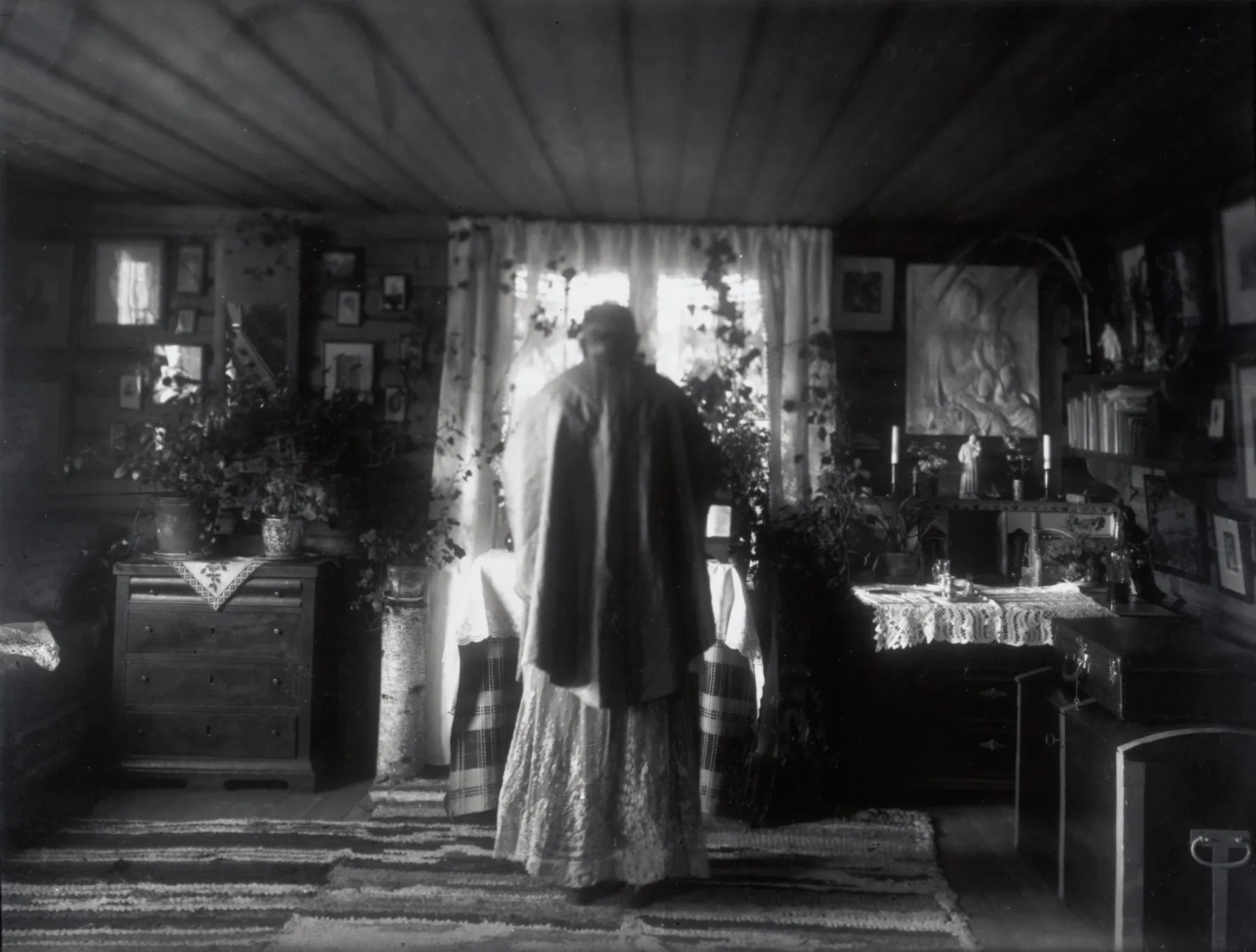
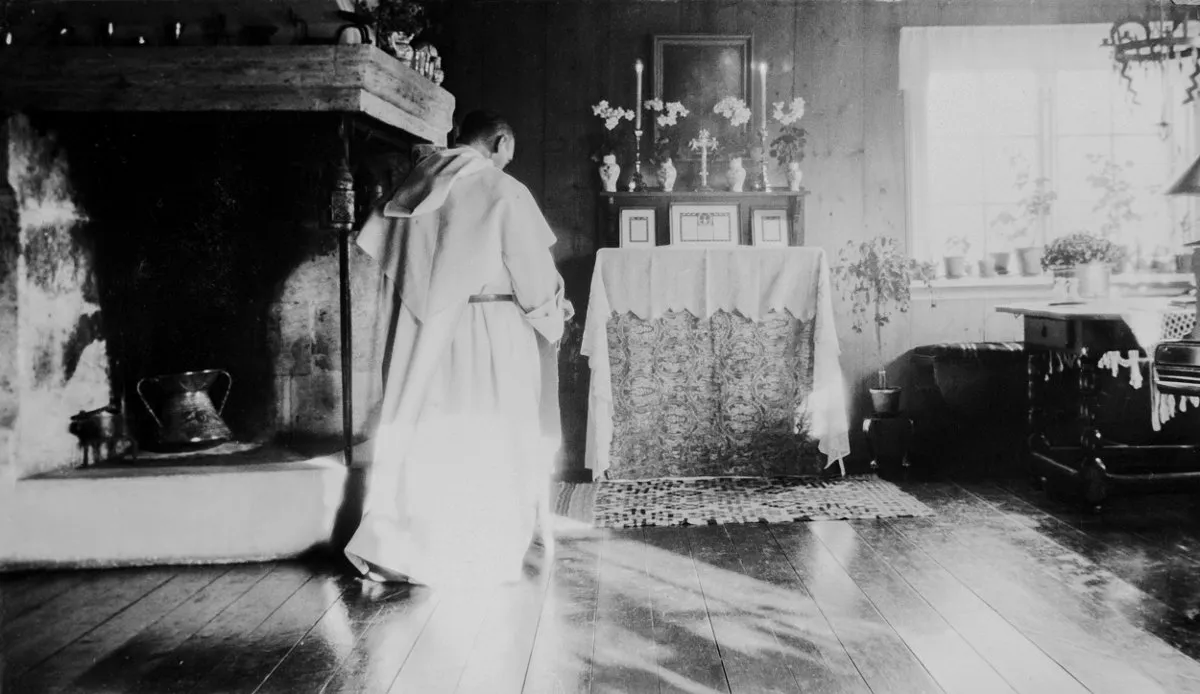
Mathea Baadstø, a woman from Tretten who converted to Catholicism in 1904, turned her living room into a chapel for celebrating the Catholic Mass, where Sigrid Undset — her godchild — also took part in Mass before she herself made her own provisional chapel in the fireplace room at Bjerkebæk. Now we see our own chapel as a kind of grandchild of their personal initiative to create a chapel in places that lay far from the nearest church, and we feel that the two of them are among our greatest supporters from the other side of eternity.
The chapel isn't finished yet.
Your support helps us build out the chapel. Every hand helps.